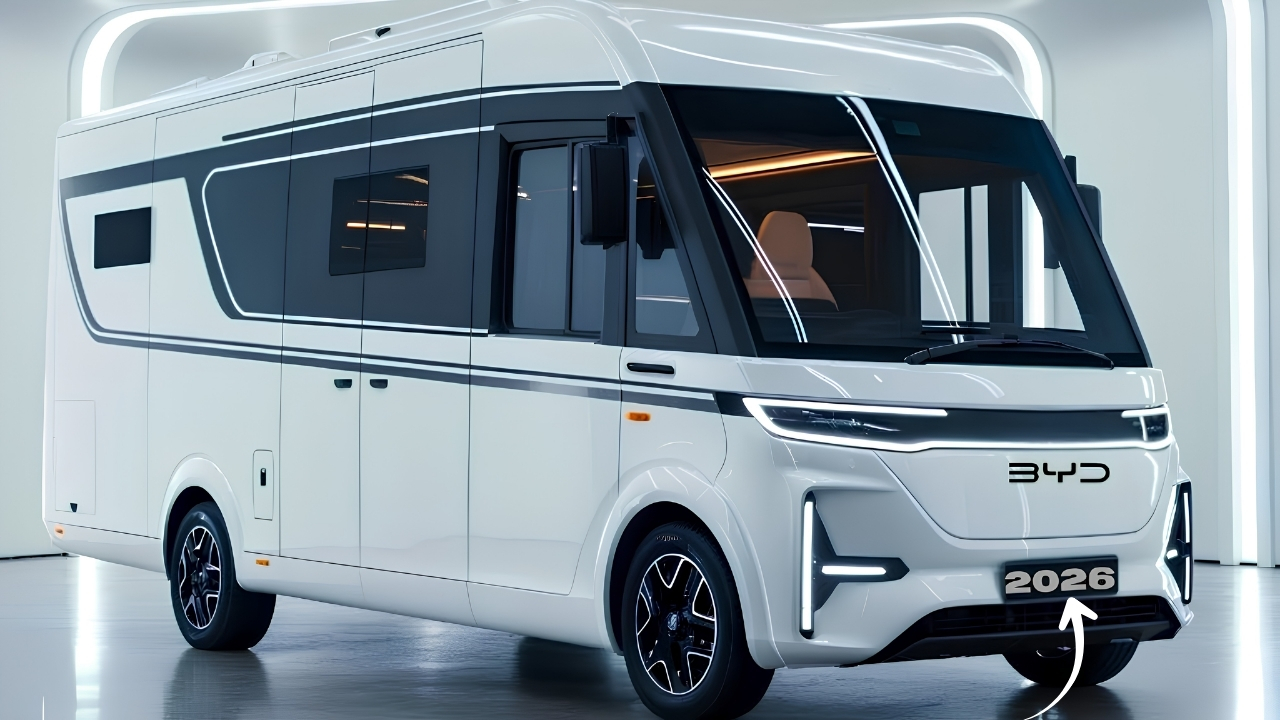
2026 BYD Motorhome : The motorhome industry is entering a new phase, and BYD’s technology is becoming an important part of that transformation. In 2026, one of the most talked-about developments is a full-size motorhome built on the BYD T5DM hybrid chassis.
Developed by Chinese startup Wanaka, the vehicle combines long-distance touring ability, electric power, solar energy and apartment-style comfort in a package designed for modern travellers.
Although many online reports refer to it as a “BYD motorhome,” it is important to clarify that the living vehicle is produced by Wanaka and uses BYD’s T5DM platform.
This distinction matters because BYD has not publicly confirmed a standalone, globally available motorhome under its own passenger-vehicle brand.
However, the T5DM-based project shows how BYD’s battery and hybrid technology could influence the future of recreational vehicles.
Built on the BYD T5DM Platform
The 2026 motorhome is based on BYD’s T5DM light-truck chassis, a platform created for commercial and long-distance applications. It uses a plug-in hybrid system combining a petrol engine with an electric motor.
This arrangement gives the vehicle greater flexibility than a fully electric motorhome, especially in areas where fast-charging infrastructure is still limited.
At the heart of the system is a 1.5-litre petrol engine supported by an electric motor producing between 70 and 150 kW, depending on the configuration. The electric motor delivers instant torque, which should help the large vehicle move smoothly from a standstill and manage inclines more confidently.
The motorhome uses rear-wheel drive and has a reported top speed of 100 km/h, making it suitable for relaxed highway touring rather than high-speed driving.
Three-Way Energy System
One of the most interesting features is the vehicle’s multi-source energy layout. Wanaka describes the system as an “iron triangle” because it combines the traction battery, the petrol engine and a separate battery designed for the living area.
The main battery uses BYD’s lithium iron phosphate Blade Battery technology and has a capacity of 55.39 kWh. It supports fast charging, with the battery reportedly charging from 30 to 80 percent in around 20 minutes under suitable conditions.
The vehicle also includes a dedicated 16.4 kWh battery for the habitation section, allowing the lights, refrigerator, climate system and other appliances to operate without placing constant pressure on the driving battery.
Solar energy adds another layer of independence. The motorhome is fitted with roof-mounted panels rated at up to 2,380 watts.
This is a substantial solar installation for a recreational vehicle and could help maintain the living-area battery during extended stays away from charging points. Solar power will not replace grid charging or fuel on every journey, but it can reduce energy consumption during camping stops.
Range Designed for Long Journeys
Range anxiety has always been one of the biggest concerns surrounding electric motorhomes. Large vehicles require more energy because of their weight, height and aerodynamic limitations. BYD’s hybrid solution attempts to address that issue by allowing drivers to use electric power for shorter trips while relying on the petrol engine for longer routes.
The reported pure-electric range is approximately 150 kilometres. In hybrid operation, the vehicle can travel between 800 and 1,100 kilometres, depending on conditions, load and driving style.
A combined CLTC figure of up to 1,400 kilometres has also been reported. These figures are based on China’s testing cycle and should not be treated as guaranteed real-world results.
For motorhome owners, the benefit is not simply a long distance between fuel stops. The hybrid system also allows travellers to use electric power in campsites, residential areas or urban locations where quiet operation and lower local emissions are especially valuable.
A Spacious Interior
The motorhome measures almost six metres in length and offers more than two metres of interior height. That gives occupants a more natural standing position and creates an atmosphere closer to a compact apartment than a traditional van conversion.
Inside, the vehicle provides two sleeping areas. The front berth measures approximately 2,230 by 1,330 millimetres, while the rear sleeping space measures around 2,220 by 1,300 millimetres.
The larger Pro Max version adds a side slide-out section, increasing the usable interior space and allowing the vehicle to accommodate up to six people.
The water system is also designed for multi-day travel. A 400-litre fresh-water tank, a 170-litre grey-water tank and a 40-litre electric water heater support cooking, washing and showering away from established campsites. A cassette toilet with a separate waste tank completes the basic onboard facilities.
Practical Kitchen and Smart Controls
The kitchen area is designed for travellers who want more than a basic camping setup. Equipment includes a large refrigerator, microwave, extractor hood and an extendable quartz worktop.
The electrical system combines 24-volt DC power with a 220-volt inverter, while the overall system output is reported at up to 11 kW.
The vehicle also includes a powered awning with LED lighting, a five-channel camera system and rear storage space capable of carrying several suitcases.
Remote functions are managed through BYD’s DiLink platform, which can control features such as air conditioning and door locking. These functions help transform the motorhome from a simple vehicle into a connected mobile living space.
Power for Outdoor Adventures
A major advantage of the BYD-based motorhome is its ability to supply electricity outside the vehicle. The habitation system can send power to the chassis, while the chassis can also provide energy to the living area.
External V2L output reaches up to 6 kW, allowing users to operate tools, cooking equipment or outdoor appliances at a campsite.
This feature could be useful during family trips, outdoor events and emergency situations. In theory, the motorhome can serve as a mobile power station, reducing the need for separate generators and helping users enjoy quieter campsites with fewer emissions.
What the 2026 BYD Motorhome Launch Means
The Wanaka motorhome represents a significant step for China’s rapidly developing recreational-vehicle sector. It combines the practicality of a hybrid powertrain with the comfort expected from a modern motorhome.
Its solar roof, dedicated living battery, large water storage system and connected technology give it a clear advantage over many basic camper conversions.
However, questions remain about international availability, after-sales support and charging compatibility outside China. For now, the vehicle appears primarily aimed at the Chinese market.
Also Read this – 2026 Bugatti Motorhome futuristic advanced luxury features, it fails 7-star hotels on wheels
Even so, the project demonstrates how BYD’s battery expertise and electrified commercial platforms could shape future motorhomes around the world.
The 2026 BYD T5DM-based motorhome is not simply another luxury camper. It is an early example of how hybrid technology, renewable energy and smart-home features can work together to make long-distance travel more comfortable, practical and environmentally conscious.